
What is documentary family photography, and is it right for your family?
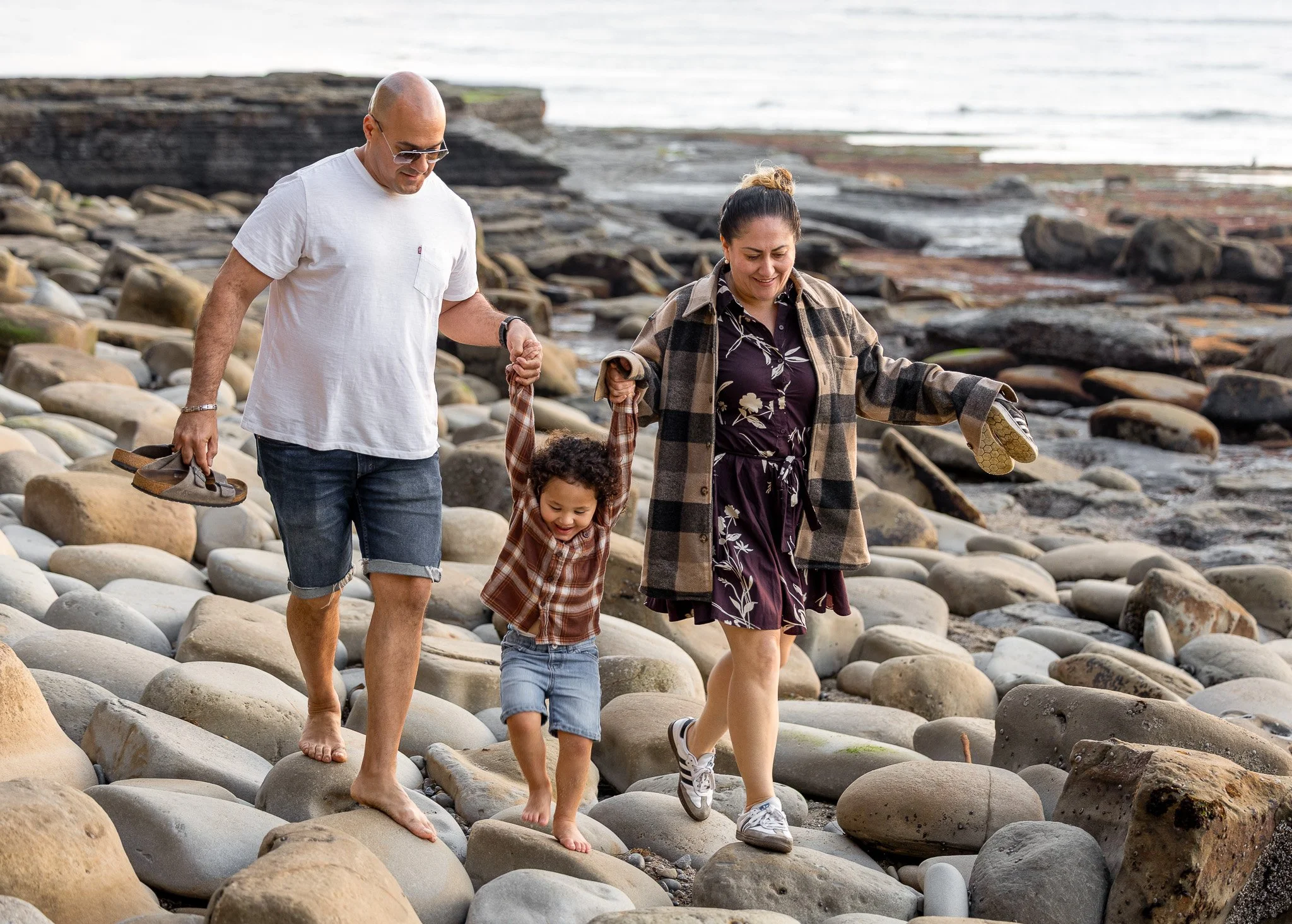
I was at a networking event in Solana Beach when someone asked me what kind of photography I do. I told her the same thing I tell everyone: family photography, but not the "stand in a line and say cheese" version.
She laughed a little. The way people do when something lands closer to home than they expected.
That description usually opens up a conversation. And those conversations almost always end up in the same place: someone pulling out their phone to show me a photo they already have. One they love. One that has been sitting in a camera roll for months or maybe years, unprinted and unhung, because it wasn't the official family photo. It was just something real that happened to get captured.
At this particular event, a woman pulled out her phone and showed me a picture of herself dancing with her mother on a beach in Florida. Taken on a family vacation. Nobody had hired a photographer. Someone just happened to have a phone out.
We looked at it together for a few minutes. I asked her if she had it printed and hanging on her wall.
She didn't. But she said she was going to.
Here is the thing I did not say out loud, but thought: that photo she was carrying in her pocket was already a documentary family photograph. It was honest, unposed, and full of something real. The only reason it hadn't made it onto her wall was that nobody “official” had taken it. No contract, no studio, no session fee. So somewhere in the back of her mind it didn't quite count.
That gap, between the image that actually means something and the one that ends up on the wall, is exactly what documentary family photography is trying to close.
What documentary family photography actually is
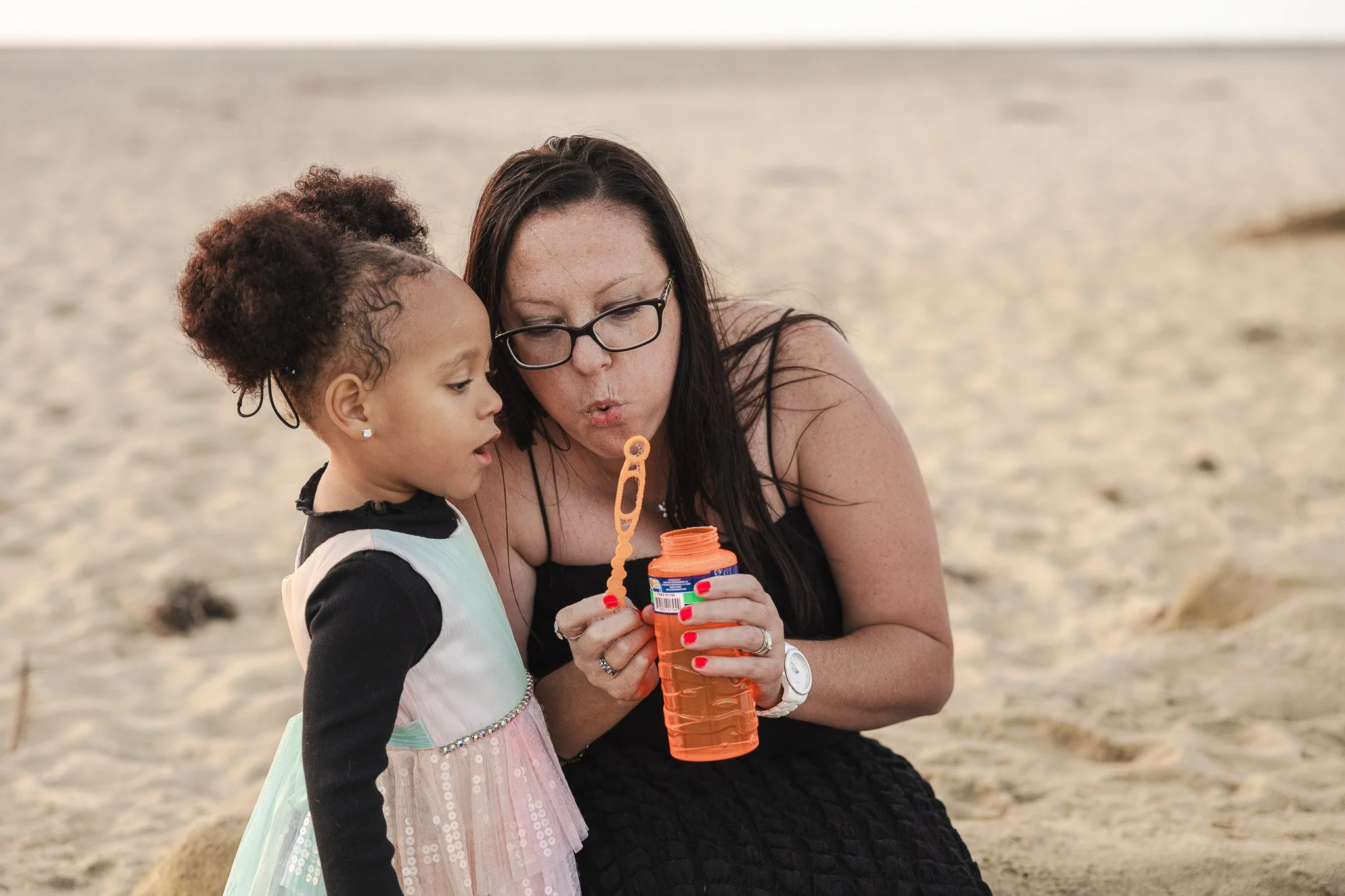
Documentary family photography is a photojournalistic approach that treats your family the way a good journalist treats a story: observe, stay out of the way, and pay attention until something real happens.
There are no poses. No standing in a line. No “everyone look here” and “say cheese” or even worse “say fuzzy pickles” or “say ‘daddy has stinky feet’”. The photographer moves with your family through something that already matters to you and photographs what they find.
This is different from a lifestyle session, where a photographer might give you loose prompts to interact while they shoot. Documentary work is more hands-off than that. The goal isn't to create a moment. It's to be present when one arrives.
What it looks like in practice
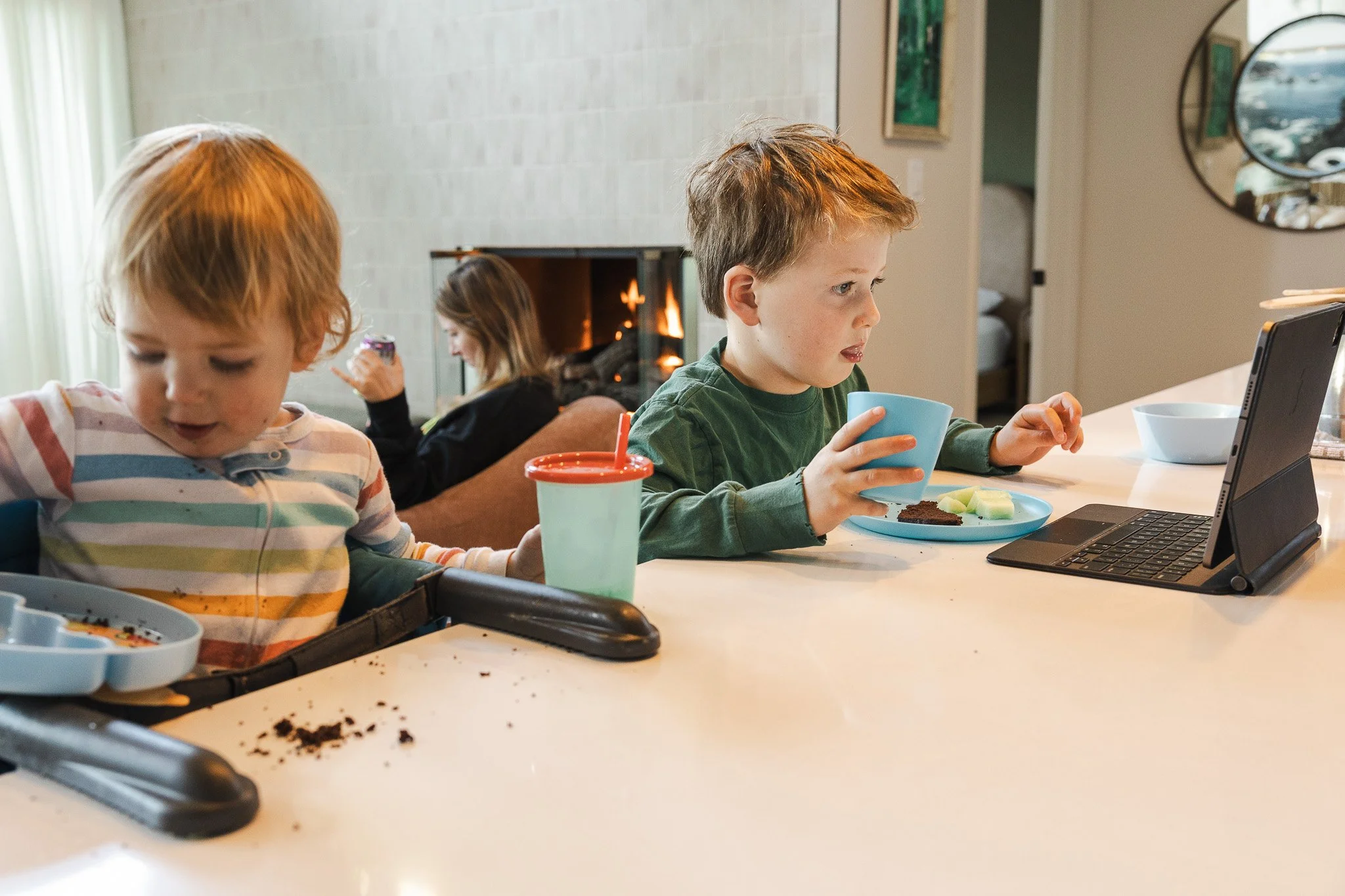
I usually explain this by asking people to imagine their family's version of a Sunday morning. Making pancakes together. The kitchen gets a little messy. The kids are in it fully, the way kids are when nobody is watching them. Everyone is themselves.
A posed portrait can tell you who was there. A documentary image of that Sunday morning can tell you who they were.
The same logic applies to location. If your family loves the mountains, a picture on the beach might be beautiful, but it's not you. Why not go where your family actually gravitates? The setting becomes part of the story.
The long-term value question
Before I picked up a camera professionally, I spent fifteen years teaching middle school science. My students would ask me every year why they should buy a yearbook. They had just spent the whole year with everyone in it. They were going to see most of these people again next year.
My answer was always the same: the yearbook's value isn't for next year. It isn't even for five years from now. It's for ten, fifteen, twenty years down the road, when everyone has scattered and the faces start to blur a little. That's when the yearbook becomes something you hold differently.
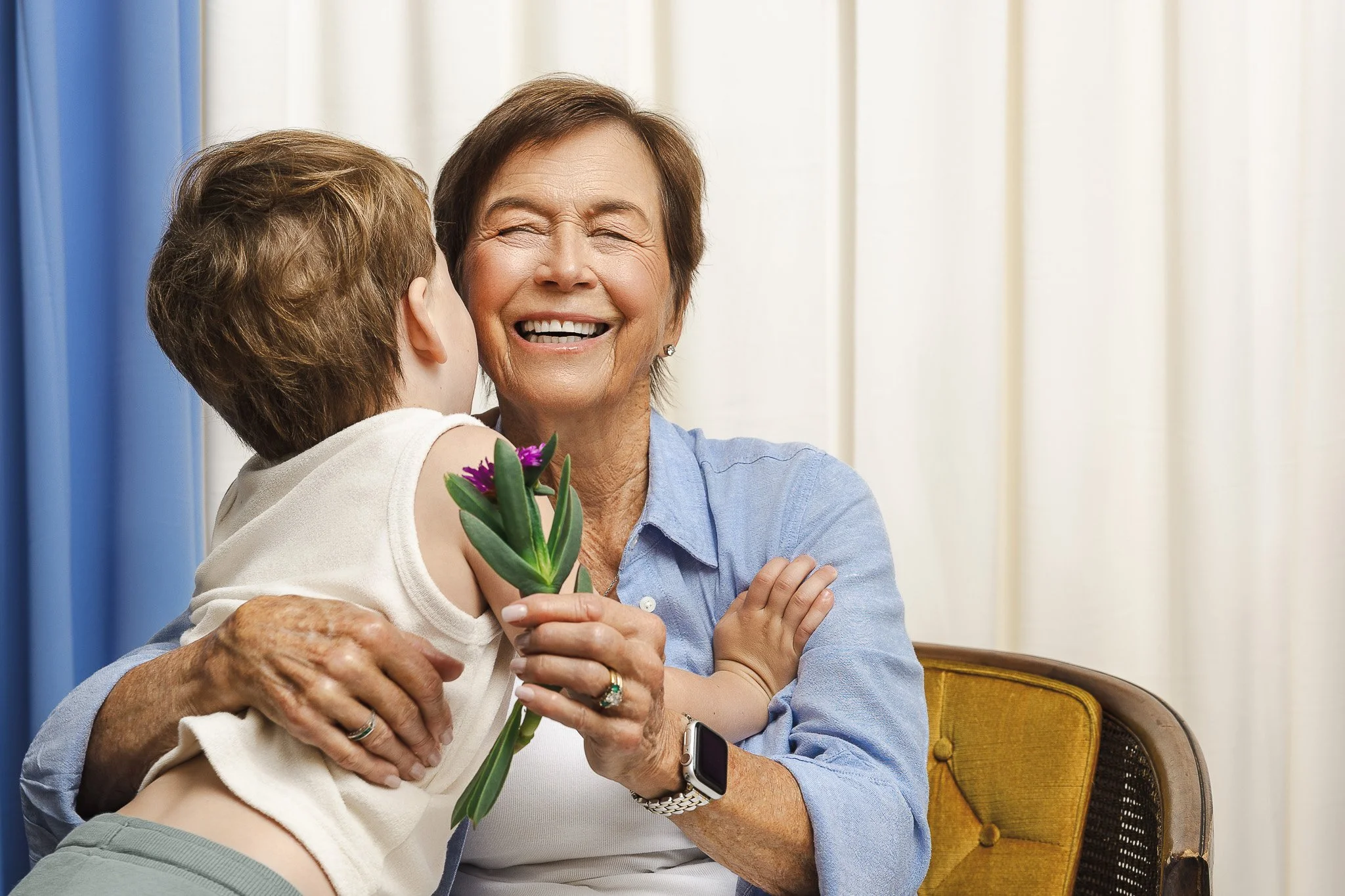
Family photographs work the same way. An image of your family standing in coordinated outfits on a beach shows who was there. An image of your family doing something they actually love shows who they were. And the longer time goes by, the more that second kind of image is worth.
Who this tends to work well for
Documentary photography tends to resonate with families who have had the experience of seeing their finished photos and thinking: they're nice, but that's not really us. Families who would rather have one image that stops them cold than twenty that are perfectly fine. Families who are less interested in performing for a camera than in just being together while someone pays attention.
It also works well for families who are willing to trust the process. Documentary sessions have an element of unpredictability to them. You can't guarantee what moment will arrive or when. What you can do is put your family in a context where real moments are likely to happen, and then let them.
Who it probably isn't the right fit for
If your primary goal is a large gallery of digital files at the lowest possible cost, this approach probably isn't built for what you're looking for. Documentary family photography is slower, more intentional, and oriented toward physical artwork that lives in your home rather than a folder on your hard drive.
If you prefer a structured session with a clear sequence of poses and a predictable outcome, there are talented photographers who specialize in exactly that, and they may be a better fit.
The families who tend to thrive in this experience are the ones who are just as interested in the time together as they are in what comes home afterward.
The image on the wall question
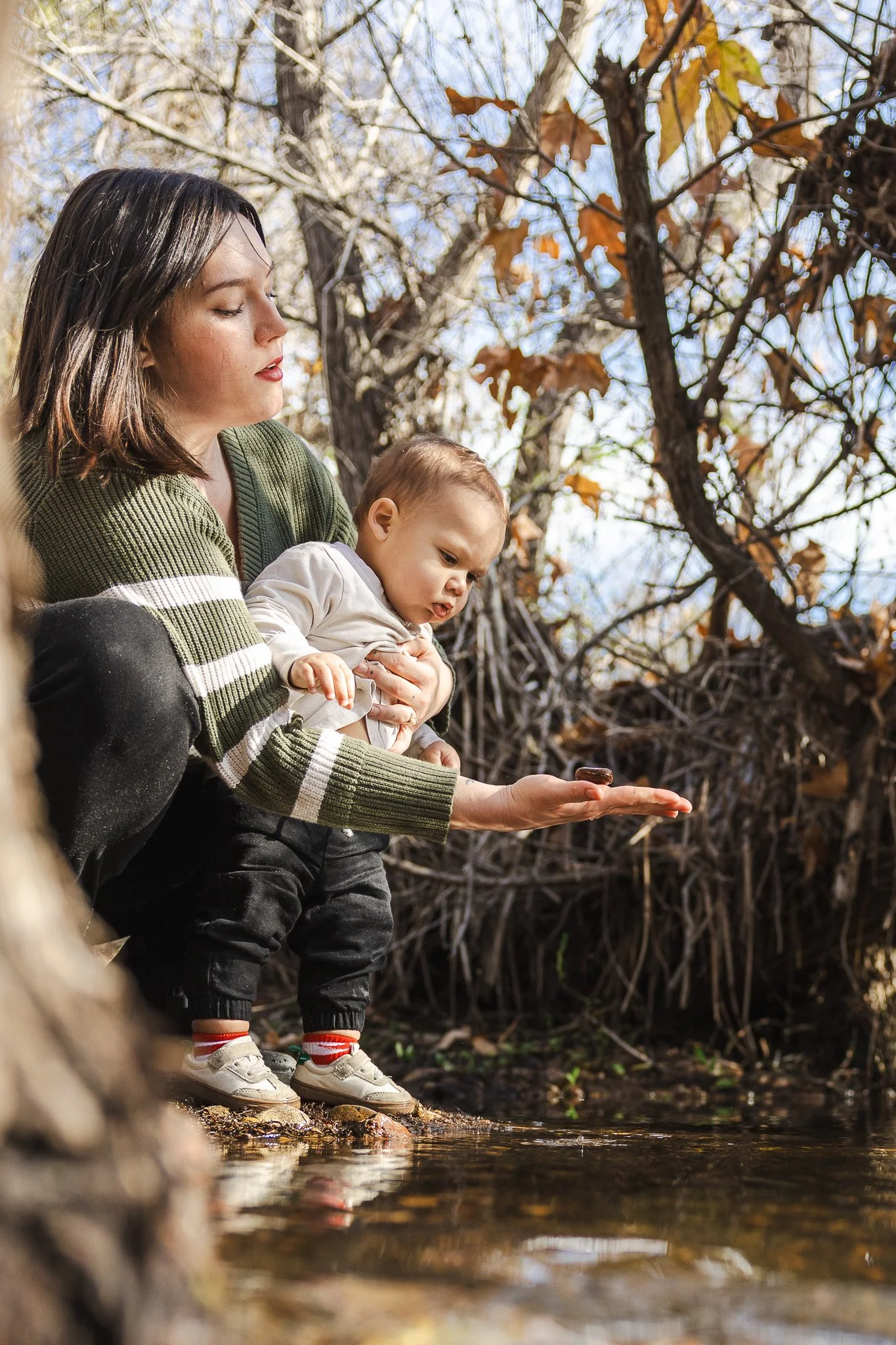
When that woman at the networking event told me she was going to print the beach dancing photo, I told her honestly that I hoped she would. And I also told her why so many people don't.
It's not a lack of intention. It's that the gap between having an image and doing something with it is wider than most people expect. Life moves fast. The folder stays closed. And eventually the moment it captures starts to feel like it belongs to a different season of your life entirely.
One of the reasons my partner Diana and I run a print-first studio is because we've seen what happens when families actually have their images on their walls. They stop and look at them. Their kids grow up walking past them. The image becomes part of the household in a way that a digital file simply cannot.
That photo on someone's phone, the unposed, unhung, quietly beautiful one, deserves better than a folder. So does yours.
If you want to see what documentary family photography looks like in practice, the portfolio is the right place to start. And if you have questions about whether this kind of session is right for your family, the Inquire page is where that conversation begins.
